On this page
People I Keep Coming Back To
These are the people whose work makes me stop and ask: How did they think of this?
Artificial Intelligence
Alan Turing - Computability, Computer Science, Artificial Intelligence

Alan Turing is one of the people whose work helped define what a computer actually is.
What I find fascinating is that he was asking a very fundamental question:
What can a machine compute ? (Can machines think ?)
Long before modern computers and artificial intelligence, Turing was thinking about computation as a mathematical concept.
For me, Turing represents something I really like about computer science: starting with a simple question, reducing it to something precise, and then discovering how far the idea goes.
John McCarthy - Artificial Intelligence, Lisp, Common Sense Reasoning
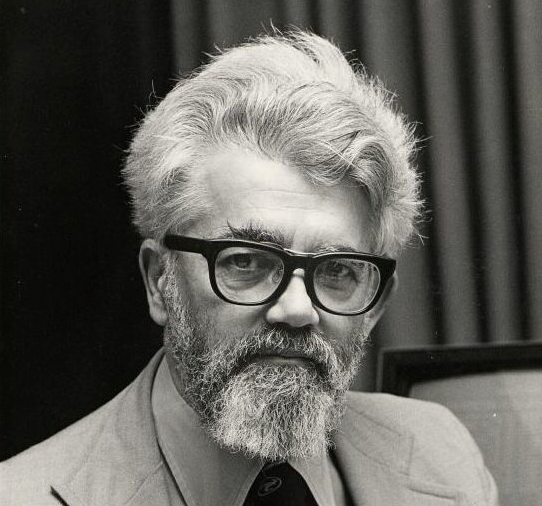
John McCarthy coined the term Artificial Intelligence and was one of the foundational figures of the field.
But what interests me isn’t simply that he is called the “father of AI.”
It is the idea behind his work:
Can intelligence be described precisely enough that a machine can reason about it?
His work on Lisp, symbolic reasoning, and formalizing aspects of intelligence became part of the foundations on which later AI research developed.
Geoffrey Hinton - Deep Learning, Backpropagation, Neural Networks

Geoffrey Hinton spent much of his career pursuing an idea that was not always popular: that artificial neural networks could learn useful representations from data.
He was one of the researchers who introduced the use of backpropagation for training neural networks and made major contributions to distributed representations, Boltzmann machines, word embeddings, and deep learning.
What interests me about Hinton is his persistence in the face of skepticism. For decades, many in the AI community doubted that neural networks could work. Hinton believed in them, kept pushing, and was proven right when deep learning exploded in the 2010s.
The key to success in AI is to keep trying even when others doubt you. (Sometimes an idea is worth pursuing even when the world isn’t ready for it yet.)
Claude Shannon - Information Theory, Digital Circuits, Communication

Claude Shannon is one of the people who fundamentally changed how we think about information.
In his 1948 paper, A Mathematical Theory of Communication, Shannon developed the foundations of information theory. He showed that information could be treated mathematically and that communication could be studied independently of the particular message being transmitted.
His ideas went far beyond communication systems. Information theory became part of the foundations of modern computing, telecommunications, data compression, cryptography, statistics, and machine learning.
For me, Shannon represents something I really like about computer science:
Find the right abstraction, and a complicated problem can become surprisingly simple. (Sometimes the hardest part of a problem is finding the right way to define it.)
Can we describe it mathematically ?
Ilya Sutskever - Deep Learning, Neural Networks, Large Language Models
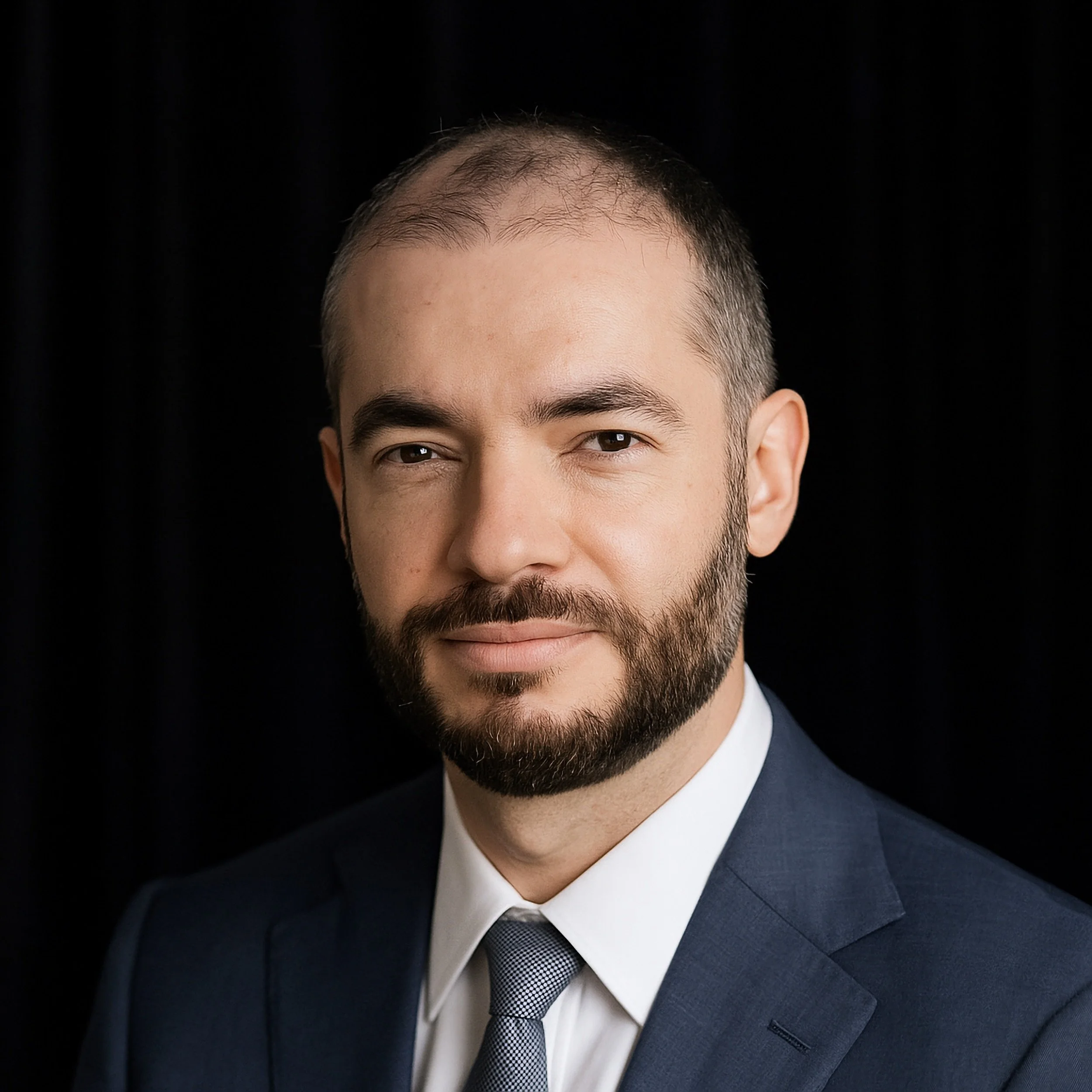
Ilya Sutskever is one of the researchers whose work helped shape the modern era of deep learning.
As a PhD student under Geoffrey Hinton, he contributed to important work on neural networks and sequence modeling. In 2012, he was one of the authors of the AlexNet paper, which demonstrated the effectiveness of deep convolutional neural networks for large-scale image recognition.
He later co-founded OpenAI, where he worked on large-scale deep learning and the development of increasingly capable AI systems.
What I find interesting about Sutskever is his focus on:
Sometimes the breakthrough isn’t a completely new idea. It’s discovering how far an existing idea can be pushed. (How far can learning systems go if we keep scaling and improving them ?)
For me, Sutskever represents the idea that deep learning is not just about building a better model for one task. It can be a way of investigating intelligence itself.
Richard S. Sutton - Reinforcement Learning, Artificial Intelligence, Learning from Interaction

Richard S. Sutton is one of the foundational researchers in reinforcement learning.
What fascinates me about his work is the idea that intelligence can emerge from a simple process:
An agent acts, receives feedback, and learns from the consequences.
His work helped establish reinforcement learning as a major area of AI, including fundamental ideas such as temporal-difference learning.
What I find interesting is the simplicity of the question:
Can an agent learn what to do simply by interacting with the world ?
For me, Sutton represents the idea that sometimes intelligence doesn’t need to be explicitly programmed. It can emerge from learning through experience.
Open Source & Software engineering
Linus Torvalds - Linux, Operating Systems, Open Source

Linus Torvalds created the Linux kernel in 1991 and went on to build one of the most influential pieces of software in computing.
What fascinates me about Torvalds is not just Linux itself, but the engineering philosophy behind it:
Build something useful, keep improving it, and let the code speak for itself.
Linux started as a personal project, but its development grew into a massive open-source collaboration.
His work also shows me something I really like about systems programming:
Simple primitives can become incredibly powerful when the foundation is right.
For me, Torvalds represents a different kind of innovation - not necessarily inventing a completely new abstraction, but building a system that is fast, practical, and capable of lasting for decades.
Chris Lattner - Compilers, LLVM, Swift

Chris Lattner is a computer scientist known for creating LLVM and later Swift.
What fascinates me about his work is the idea that programming languages and compilers don’t have to hide how computers work. They can make powerful abstractions while still giving programmers control over performance and the underlying machine.
LLVM in particular became more than just a compiler project. Its modular design turned it into infrastructure used by many languages and tools.
What I find interesting is the question behind it:
Can we build abstractions that are both elegant for humans and efficient for machines?
For me, Lattner represents something I really like about systems programming:
Good abstractions don’t have to come at the cost of understanding the machine.
John Carmack - Game Engines, Graphics, Systems Programming

John Carmack is one of the programmers whose work makes me appreciate how far you can push a computer with a deep understanding of its fundamentals.
His work on games such as Doom and Quake helped advance real-time 3D graphics, game engines, and systems programming.
What fascinates me isn’t just what he built, but how he approached problems.
Understand the machine deeply, then make it do something that seemed impossible.
For me, Carmack represents the idea that performance isn’t magic. It comes from understanding the layers beneath the abstraction and removing unnecessary complexity.
Fabrice Bellard - Systems, Compilers, Computing

Fabrice Bellard is a programmer and computer scientist known for creating projects such as FFmpeg, QEMU, Tiny C Compiler, and QuickJS.
What fascinates me about Bellard is how often he takes problems that seem enormous and reduces them to surprisingly small, efficient systems.
His work makes me appreciate a different kind of engineering:
How much can you build with very little?
For me, Bellard represents the beauty of understanding computers deeply enough to remove unnecessary complexity.
Not just making something work, but asking:
What is the smallest, fastest, simplest system that can do this ?
George Hotz (geohot) - Reverse Engineering, AI, Systems

George Hotz, better known as geohot, is a hacker, programmer, and AI researcher known for projects ranging from reverse engineering the iPhone and PlayStation 3 to building autonomous-driving and machine-learning systems.
What interests me most isn’t any single project.
It’s the way he approaches problems.
He seems to have a habit of taking complicated systems and asking:
How does this actually work?
Then he goes down to the lowest level necessary to find out.
For me, geohot represents something I really value in programming:
Don’t just use the abstraction. Understand what’s underneath it.
That mindset - curiosity, independence, and a willingness to build things from first principles - is a big part of why I keep coming back to his work.
The light that found me in the night I was lost.
Algorithms and Systems Thinking
Donald Knuth - Algorithms, Algorithms Analysis, Computer Science

Donald Knuth is one of the people who made me appreciate algorithms as more than just tools for solving problems.
His work on The Art of Computer Programming turned algorithms into something that could be studied deeply - their structure, efficiency, correctness, and mathematical properties.
What fascinates me about Knuth is his obsession with understanding why an algorithm works, not just whether it works.
Can we understand computation deeply enough to explain it mathematically ?
For me, Knuth represents a way of thinking I really value:
Don’t just make it work. Understand why it works.
Leslie Lamport - Distributed Systems, Concurrency, Formal Methods

Leslie Lamport is one of the foundational figures in distributed computing and formal methods.
His work gave us ways to reason about systems where many computers operate independently and communicate with each other.
What fascinates me is the problem itself:
How do you reason about a system when no single machine can see everything ?
His work on logical clocks, distributed systems, and the Paxos consensus algorithm shaped how we understand ordering, agreement, and correctness in distributed systems.
He also created LaTeX, which became one of the most widely used systems for writing technical and mathematical documents.
For me, Lamport represents something I really like about computer science:
Don’t just make a system work. Find a way to reason about why it works.